
The Bristol Commons is a movement of people coming together to create change. We aim to nurture community resilience and abundance through grassroots democracy and networks of mutual aid. Our vision is for a world in which everyone effectively and enjoyably meets their own and each other’s needs, regenerating the natural world, and ourselves as part of it, through the collective power of the commons.
Design Jess Balla
We seek to enable community ownership and governance, so that we all have agency in shaping the systems and services that support us and reclaim the power to shape our local surroundings.
We believe that failure (being an outcome of experimentation, curiosity and play) is welcome, and is essential for learning and growing. We recognise the importance of anti-colonial and indigenous perspectives, those of the global majority and those of the most marginalised in our society. We aim to incorporate principles and practices from a wide range of perspectives including permaculture, living systems, sociocracy, emergent strategy, non-violent communication and alternative economics (barefoot economics, doughnut economics, community economies).
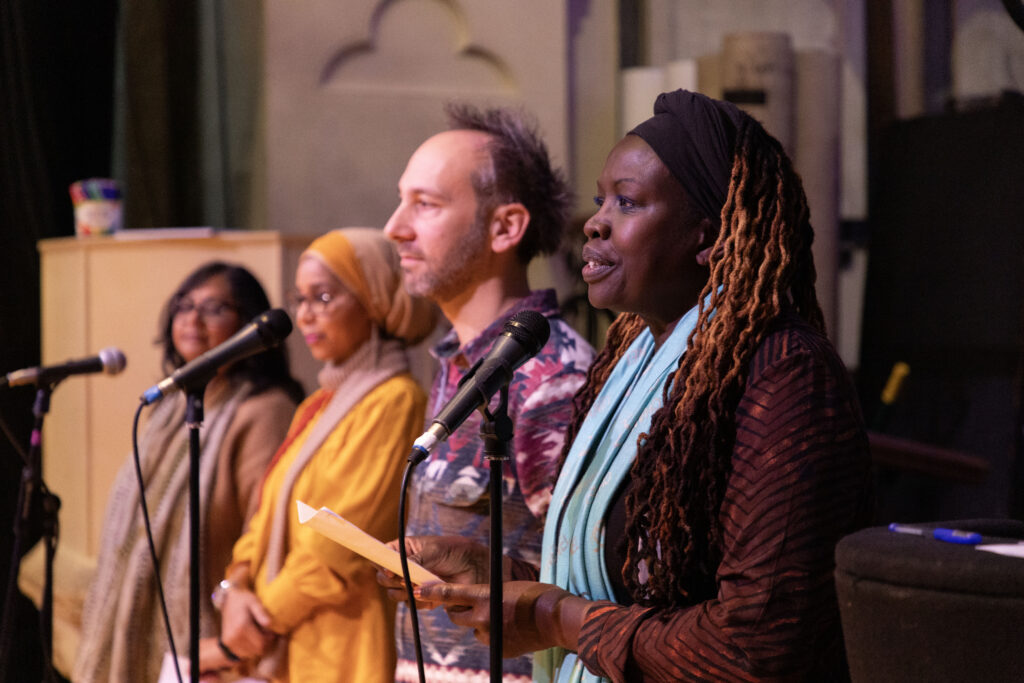
This movement is defined by the people within it, and therefore grows and shifts as the community’s concerns, interests, skills and dreams grow and shift. We are dedicated to creating a movement that is accessible and understandable, with comprehensible and transparent decision-making processes, so that anyone can be a part of The Bristol Commons.
What is “the commons”?
The commons is a living social system through which a community organise, manage and share resources together over time.
This includes physical resources, stewarded collectively over a prolonged period of time, such as land, water and buildings, and less tangible resources such as knowledge, wisdom and care.

All members of a community have access to the commons and participate in it. In this sense, commoners – those who are part of the commons – share responsibility for its governance. Commoning can be understood as the practice of creating commons, whereby the members of a community come together to meet their needs through self-governance and collaborative care. These practices will generally be guided by a set of community agreements, co-created by the commoners themselves.
At the centre of commons and commoning is the joy and wellbeing fostered by participation and collaboration. Cooperation, conviviality and coordination enable commoners to support each other’s needs and desires to be met, supporting life to thrive sustainably and without exploitation.

The commons and commoning is an antidote to enclosure, privatisation and disconnection – as well as a way of thinking, doing and being that is restorative, enlivening and empowering. It is a dynamic and resilient network of relationships and a system of governance that prioritises healthy, harmonious living over capital and short-term individualised gain. In this sense it is a real and exciting way to nurture and grow community health and wealth.
Contemporary examples of the commons and commoning can be seen around the world – from open source software such as Wikipedia to community supported agriculture schemes. As David Bollier – a renowned commons writer – observes, there are many different ways to understand the commons. “That’s because the commons is not so much a fixed, universal thing as a general concept describing durable, dynamic sets of social relationships for managing resources — all sorts of resources: digital, urban, natural, indigenous, rural, cultural, scientific, to use some crude categories.” If you want to immerse yourself in the history as well as current examples of the commons, his website, podcast and books are a good place to start.
To learn more about what we in The Bristol Commons have been doing so far, read about Our Story.